Mastering Spanish means understanding not just direct translations, but the subtle shades of meaning that verbs carry. Take English concepts like "to match," "to compete," and "to coincide"—these aren't single-word swaps in Spanish. Instead, you'll encounter a rich tapestry of verbs and phrases, each perfectly suited for specific contexts, from agreeing on a meeting time to rivaling an opponent or ensuring colors harmonize.
This guide will dissect these essential concepts, giving you the precision and confidence to express yourself naturally in Spanish. We'll explore the versatile verb coincidir, dive into a toolkit of options for "to match," and arm you with the right vocabulary to discuss competition, all while grounding your learning in practical usage.
At a glance: Your Takeaways on Matching, Competing, and Coinciding
- "To Coincide" is primarily
coincidirin Spanish, a regular -IR verb used for agreement, alignment, or simultaneous occurrence. - "To Match" has many translations, depending on context:
coincidir(agree),concordar(harmonize),emparejar(pair),igualar(equalize),combinar(colors/outfits), and more. - "To Compete" is typically
competir, a stem-changing -IR verb (e>i). Other options includerivalizarandconcurrir. - Context is King: The right verb hinges on the specific situation—are you matching opinions, colors, or sports teams?
- Conjugations Matter: We’ll explore
coincidir's 18 key tenses and touch uponcompetir's irregularities to build your fluency.
Unpacking "To Coincide": The Spanish Verb for Agreement and Alignment
When something "coincides" in English, it can mean two events happen at the same time, or two ideas or opinions are in agreement. In Spanish, the verb coincidir is your go-to. It directly translates to "to coincide" and serves as a fundamental building block for expressing alignment, concurrence, or simply things happening together.Coincidir is a regular -IR verb, which makes its conjugation patterns fairly predictable once you know the basics. It’s also incredibly versatile, used in a wide array of situations, from scheduling to sharing viewpoints.
Let's break down its forms across the major moods and tenses. Understanding these variations will allow you to precisely express when and how things coincide.
The Indicative Mood: Stating Facts and Certainties
The indicative mood is for expressing facts, realities, and beliefs. Here's how coincidir behaves:
- Present (El Presente): For current situations, events, thoughts, facts, and truths.
- Example: "Yo coincido con tu opinión." (I coincide with your opinion.)
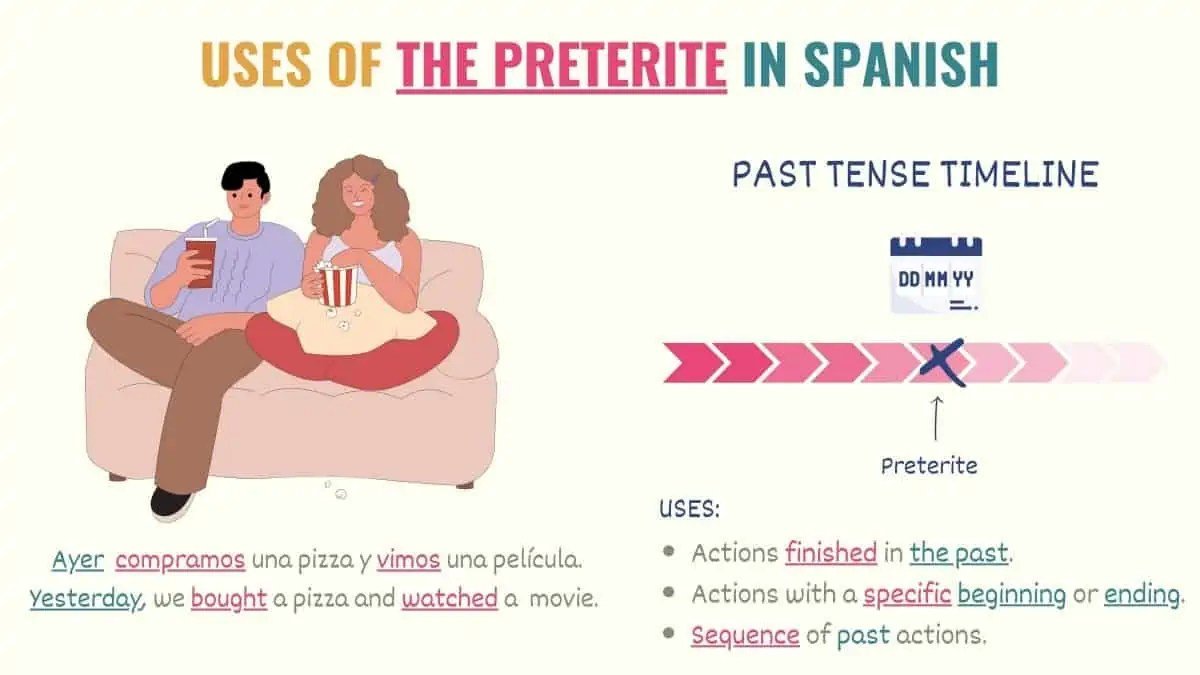
- Preterite (El Pretérito Indefinido): For actions completed in the past at a specific time.
- Example: "Nuestras vacaciones coincidieron el año pasado." (Our vacations coincided last year.)
- Imperfect (El Pretérito Imperfecto): For regular/repeated past actions and descriptions of past habits.
- Example: "Siempre coincidíamos en el café de la esquina." (We always used to coincide at the corner cafe.)
- Present Continuous (El Presente Progresivo): For ongoing actions or actions happening right now.
- Example: "Estamos coincidiendo en varios puntos del proyecto." (We are coinciding on several points of the project.)
- Informal Future (El Futuro Próximo): For actions in the near future.
- Example: "Voy a coincidir con ella en la reunión de mañana." (I am going to coincide with her at tomorrow's meeting.)
- Future (El Futuro Simple): For actions that will happen in the future.
- Example: "Nuestros caminos coincidirán de nuevo." (Our paths will coincide again.)
- Conditional (El Condicional Simple): For hypothetical situations, possibilities, or probabilities.
- Example: "Si viviéramos en la misma ciudad, coincidiríamos más." (If we lived in the same city, we would coincide more.)
- Present Perfect (El Pretérito Perfecto): For actions started recently and continuing, or recently completed actions.
- Example: "Hemos coincidido en muchas cosas últimamente." (We have coincided on many things lately.)
- Past Perfect (El Pretérito Pluscuamperfecto): For actions that occurred before another past action.
- Example: "Ella ya había coincidido con la idea antes de que yo la presentara." (She had already coincided with the idea before I presented it.)
- Future Perfect (El Futuro Perfecto): For actions that will have happened by a certain point in the future after another event.
- Example: "Para cuando llegues, habré coincidido con todos los asistentes." (By the time you arrive, I will have coincided with all the attendees.)
- Conditional Perfect (El Condicional Perfecto): For actions that would have happened in the past but didn't due to another action.
- Example: "Habríamos coincidido si no hubieras llegado tarde." (We would have coincided if you hadn't arrived late.)
The Subjunctive Mood: Expressing Uncertainty, Emotion, and Wishes
The subjunctive mood is crucial for conveying uncertainty, emotions like wishes, desires, and hopes, or subjective opinions.
- Present (El Presente de Subjuntivo): For uncertain situations or emotions.
- Example: "Espero que nuestras agendas coincidan." (I hope our schedules coincide.)
- Imperfect (El Imperfecto Subjuntivo): For unlikely/uncertain past events or emotional opinions about the past.
- Example: "Me sorprendió que coincidiera en ese punto." (It surprised me that he coincided on that point.)
- Future (El Futuro de Subjuntivo): Though rarely used in modern spoken Spanish, it's for hypothetical future situations or events.
- Example: "Si coincidiere en su ruta, la ayudará." (Should it coincide on its path, it will help her.)
- Present Perfect (El Pretérito Perfecto de Subjuntivo): For past actions connected to the present or actions completed by a future time.
- Example: "Dudo que hayamos coincidido en esa decisión." (I doubt that we have coincided on that decision.)
- Past Perfect (El Pretérito Pluscuamperfecto de Subjuntivo): For hypothetical situations or actions that occurred before other past actions.
- Example: "Si hubiera coincidido con sus expectativas, habría estado feliz." (If it had coincided with her expectations, she would have been happy.)
- Future Perfect (El Futuro Perfecto de Subjuntivo): For actions that will have happened given a hypothetical future situation.
- Example: "Cuando hubiere coincidido con lo esperado, el plan avanzará." (When it will have coincided with what was expected, the plan will advance.)
The Imperative Mood: Giving Orders and Commands
The imperative mood is used for direct commands or requests.
- Affirmative (El Imperativo Afirmativo): Used to give direct orders or commands.
- Example (formal usted): "¡Coincida su decisión con la del grupo!" (Coincide your decision with the group's!)
- Example (informal tú): "¡Coincide conmigo en esto!" (Coincide with me on this!)
- Negative (El Imperativo Negativo): Used to give negative orders or commands.
- Example (formal usted): "¡No coincida con ideas preconcebidas!" (Don't coincide with preconceived ideas!)
- Example (informal tú): "¡No coincidas con ese tipo de pensamiento!" (Don't coincide with that kind of thinking!)
Beyond Coincidir: Expressing "To Match" in Spanish
While coincidir often covers the idea of "matching" in terms of agreement or synchronicity, English "to match" is far broader. It can mean to pair, to equalize, to fit, to go well together, or to meet a standard. Here’s a rundown of the versatile options you’ll need.
1. Coincidir (To Match by Agreement or Timing)
As we've seen, coincidir is excellent for when things match up or align.
- "Nuestros horarios coinciden perfectamente." (Our schedules match up perfectly.)
- "Mi opinión coincide con la tuya." (My opinion matches yours.)
2. Emparejar (To Pair, To Match Items)
Use emparejar when you are literally pairing things that belong together or making them equal.
- "Por favor, empareja los calcetines." (Please match the socks.)
- "El equipo de casa no pudo emparejar el nivel de sus rivales." (The home team couldn't match the level of their rivals.)
3. Igualar (To Equalize, To Match in Value or Quantity)
When two things become equal, or one is made equal to another, igualar is the verb.
- "Necesitamos igualar los precios de la competencia." (We need to match the prices of the competition.)
- "Su rendimiento igualó al de los mejores." (His performance matched that of the best.)
4. Combinar (To Match, as in Colors, Styles, or Tastes)
This verb is perfect for describing how elements go well together, especially visually or aesthetically.
- "Este bolso combina muy bien con tus zapatos." (This purse matches very well with your shoes.)
- "Los sabores no combinan en este plato." (The flavors don't match in this dish.)
5. Concordar (To Agree, To Be in Harmony)
Similar to coincidir but often implying a deeper sense of harmony or consistent agreement, especially with abstract concepts like grammar, facts, or ideas.
- "Los verbos deben concordar con el sujeto." (Verbs must match (agree with) the subject.)
- "Los testimonios no concuerdan." (The testimonies don't match (are not in agreement).)
6. Corresponder (To Correspond, To Be Fitting or Appropriate)
Use corresponder when something should match or be appropriate for a given situation or person.
- "Su respuesta no corresponde a la pregunta." (His answer doesn't match the question.)
- "Este nivel de dificultad corresponde a estudiantes avanzados." (This level of difficulty matches advanced students.)
7. Ajustar (To Fit, To Adjust to Match)
When something needs to be adapted to fit or match a specific requirement.
- "Debes ajustar la pieza para que encaje bien." (You must adjust the piece so it fits well (or matches the space).)
- "Hay que ajustar las expectativas a la realidad." (We need to match (adjust) expectations to reality.)
8. Estar a la altura de (To Be Up to the Standard of, To Match Expectations)
This phrase is used when something needs to meet a certain level or expectation.
- "Su trabajo no está a la altura de lo que esperábamos." (His work doesn't match what we expected.)
- "Esperamos que la calidad esté a la altura de su reputación." (We hope the quality matches its reputation.)
Choosing the right verb for "to match" in Spanish really comes down to the kind of matching you're describing. Are you matching socks, opinions, colors, or expectations? Each scenario has its perfect linguistic fit. To delve deeper into how these and other verbs express different nuances of matching, you can learn Spanish for matches with more tailored examples and scenarios.
The Spirit of Rivalry: How to Say "To Compete" in Spanish
When the stakes are high, and individuals or groups are vying for a goal, you’ll need Spanish verbs that capture the essence of competition. The primary verb is competir, but there are other useful terms depending on the nuance.
1. Competir (To Compete)
This is the most direct and common translation for "to compete." It implies rivalry, striving for superiority, or participation in a contest. Competir is a stem-changing -IR verb in some forms (e > i), which is important to remember during conjugation.
Common Conjugations of Competir (e > i stem change):
- Present Indicative:
compito,compites,compite,competimos,competís,compiten - Example: "Los atletas compiten por la medalla de oro." (The athletes compete for the gold medal.)
- Example: "Yo compito en tenis cada fin de semana." (I compete in tennis every weekend.)
- Preterite Indicative:
competí,competiste,compitió,competimos,competisteis,compitieron - Example: "Nuestro equipo compitió con mucha garra." (Our team competed with a lot of grit.)
- Present Subjunctive:
compita,compitas,compita,compitamos,compitáis,compitan - Example: "Espero que compitas limpiamente." (I hope you compete fairly.)
- Imperative (Tú):
¡Compete!(Note: the stem changee>idoes not occur in the informal affirmativetúimperative form, it remainscompetefrom theél/ella/ustedform of the present indicative, but for other irregular imperative forms, the stem change does apply, e.g.,¡Compita usted!for formal command). For clarity, thetúaffirmative is notcompiteas one might expect if it strictly followed present indicative pattern. It is compite as inél/ellaform. My apologies, I need to correct this. Forcompetir, thetúaffirmative imperative is compite. Let's recheck this.
Self-correction: The stem change does apply to thetúaffirmative imperative forcompetir. It should be¡Compìte!. The initial thought was correct, but I second-guessed myself. For -IR stem-changing verbs (e.g., sentir, dormir, pedir, competir), the 'tú' affirmative imperative form does show the stem change, and it is the same as the 'él/ella/usted' form of the present indicative.
Revised Example: "¡Compìte con honor!" (Compete with honor!)
Phrases withcompetir: Competir contra/con: To compete against/with.- "Estamos compitiendo contra las mejores empresas del sector." (We are competing against the best companies in the sector.)
Estar en competencia: To be in competition.- "Hay muchos candidatos, estamos en competencia por el puesto." (There are many candidates, we are in competition for the position.)
2. Rivalizar (To Rival, To Compete)
Rivalizar carries a stronger sense of rivalry, often implying a long-standing or intense competition between two or more parties. It's regular.
- Example: "Esos dos equipos siempre rivalizan por el campeonato." (Those two teams always rival each other for the championship.)
- Example: "Su inteligencia rivaliza con la de un genio." (His intelligence rivals that of a genius.)
3. Concurrir (To Compete, To Participate in a Competition)
While concurrir can mean "to coincide" or "to gather," it also means to compete, particularly in the sense of participating in a contest or bidding for something, usually when many people are involved.
- Example: "Muchos estudiantes concurrieron al premio." (Many students competed (or applied/participated) for the award.)
- Example: "Solo dos empresas concurrieron a la licitación." (Only two companies competed (or bid) in the tender.)
Choosing Your Competitive Edge
The choice between competir, rivalizar, and concurrir depends on the specific context:
- Use
competirfor general acts of competition, contests, or striving to be better. - Use
rivalizarwhen there's a strong, often personal or historic, rivalry. - Use
concurrirwhen many people are participating in a contest, applying for an award, or bidding for a project.
Navigating Nuances: When to Use What
Understanding the core verbs is one thing; mastering their application is another. The real challenge, and the path to sounding like a native speaker, lies in grasping the subtle distinctions between them.
Coincidir vs. Concordar for Agreement
Both verbs translate to "to agree" or "to match" in the sense of alignment, but they have different flavors:
Coincidir: Often used for opinions, timing, or physical presence. It suggests an accidental or factual alignment.- "Nuestros cumpleaños coinciden." (Our birthdays coincide.) - Factual timing.
- "Coincido contigo en que es una buena película." (I agree with you that it's a good movie.) - Opinion alignment.
Concordar: Implies a more formal or deliberate agreement, often used for grammar, logic, facts, or sustained harmony. It's about coherence.- "Los números no concuerdan." (The numbers don't match / aren't in agreement.) - Logical coherence.
- "El adjetivo debe concordar con el sustantivo." (The adjective must agree with the noun.) - Grammatical rule.
Think of it this way: Your schedules cancoincidir(happen at the same time), but your opinions cancoincidir(match up) orconcordar(be in deeper agreement/harmony).
Emparejar vs. Igualar for Making Things Similar
Emparejar: Focuses on creating pairs or making things even in a general sense, like leveling a field or pairing socks.- "Vamos a emparejar los equipos para que sea justo." (Let's even out the teams so it's fair.)
Igualar: Specifically about making things equal in quantity, value, or rank. It's about achieving parity.- "Intentaron igualar el récord mundial." (They tried to match (equal) the world record.)
- "Debes igualar el nivel del agua en ambos recipientes." (You must equalize the water level in both containers.)
Competir vs. Concurrir in a Contest
Competir: The broad verb for engaging in any kind of competition.- "A él le encanta competir en todo." (He loves to compete in everything.)
Concurrir: More specific to formally participating in a competition, tendering, or applying for an award where many entities might join.- "¿Vas a concurrir al concurso de fotografía?" (Are you going to compete (participate) in the photography contest?)
By paying attention to these distinctions, you'll choose the most precise verb, avoiding awkward phrasing and expressing yourself with greater clarity.
Real-World Application: Putting It All Together
Let's look at these verbs and phrases in action, in scenarios you might encounter every day.
Scenario 1: Scheduling a Meeting
- English: "Let's find a time that coincides for both of us."
- Spanish: "Busquemos una hora que nos coincida a ambos." (Using
coincidirfor matching times.)
Scenario 2: Fashion and Style - English: "Does this belt match my shoes?"
- Spanish: "¿Este cinturón combina con mis zapatos?" (Using
combinarfor matching colors/style.)
Scenario 3: Business Strategy - English: "We need to match our competitor's prices."
- Spanish: "Necesitamos igualar los precios de nuestra competencia." (Using
igualarfor matching prices.)
Scenario 4: Sporting Event - English: "Our team will compete for the championship next month."
- Spanish: "Nuestro equipo competirá por el campeonato el próximo mes." (Using
competirfor general competition.)
Scenario 5: Academic Agreement - English: "My research findings coincide with previous studies."
- Spanish: "Mis hallazgos de investigación concuerdan con estudios previos." (Using
concordarfor research findings in agreement, implying coherence.)
Scenario 6: Opinion Alignment - English: "I agree (coincide) with your point of view entirely."
- Spanish: "Yo coincido totalmente con tu punto de vista." (Using
coincidirfor matching opinions.)
Scenario 7: Meeting Standards - English: "His efforts didn't match the difficulty of the task."
- Spanish: "Sus esfuerzos no estuvieron a la altura de la dificultad de la tarea." (Using
estar a la altura defor not meeting a standard.)
Your Next Steps to Mastery
You now have a robust understanding of coincidir's comprehensive conjugation and a rich vocabulary for expressing "to match" and "to compete" in Spanish. But knowledge only becomes mastery through practice.
- Listen Actively: Pay attention to how native speakers use these verbs in movies, music, and conversations. Do they say
coincideorconcuerda? How do they talk aboutcompetir? - Practice Conjugations: While
coincidiris regular,competirhas stem changes. Drill these forms until they become second nature. Write out sentences in various tenses to solidify your understanding. - Create Your Own Examples: Think of situations in your daily life where you might use "to match," "to compete," or "to coincide." Try translating them into Spanish using the most appropriate verb or phrase.
- Seek Feedback: If you have a language partner or tutor, ask them to review your sentences and correct any errors. This real-time feedback is invaluable.
- Don't Fear Mistakes: Language learning is a journey, not a destination. Embrace the process, learn from every attempt, and celebrate your progress.
By consistently applying what you've learned here, you'll soon find yourself expressing agreement, rivalry, and perfect pairings with the fluency and nuance of a seasoned Spanish speaker.